


In Thailand, if you’re a soft skills trainer, you can call yourself a Coach. If you’re a motivational speaker, you can be a Coach. If you’re an English teacher, you can go by as a Coach.
But true leadership coaching is neither teaching, training, nor preaching. If you are looking for executive coaching in Bangkok or across APAC, it is vital to understand the difference between surface-level advice and deep mindset transformation.
so, What is (leadership) Coaching?
A leader came to Haritha wanting to inspire their team. To be a more inspirational speaker.
During their coaching conversation, the leader realised what they actually wanted was something deeper: to build emotional trust with their team. With their children.
They felt ‘emotionally illiterate.’
The real growth opportunity wasn’t in what they were saying, but in who they were being.
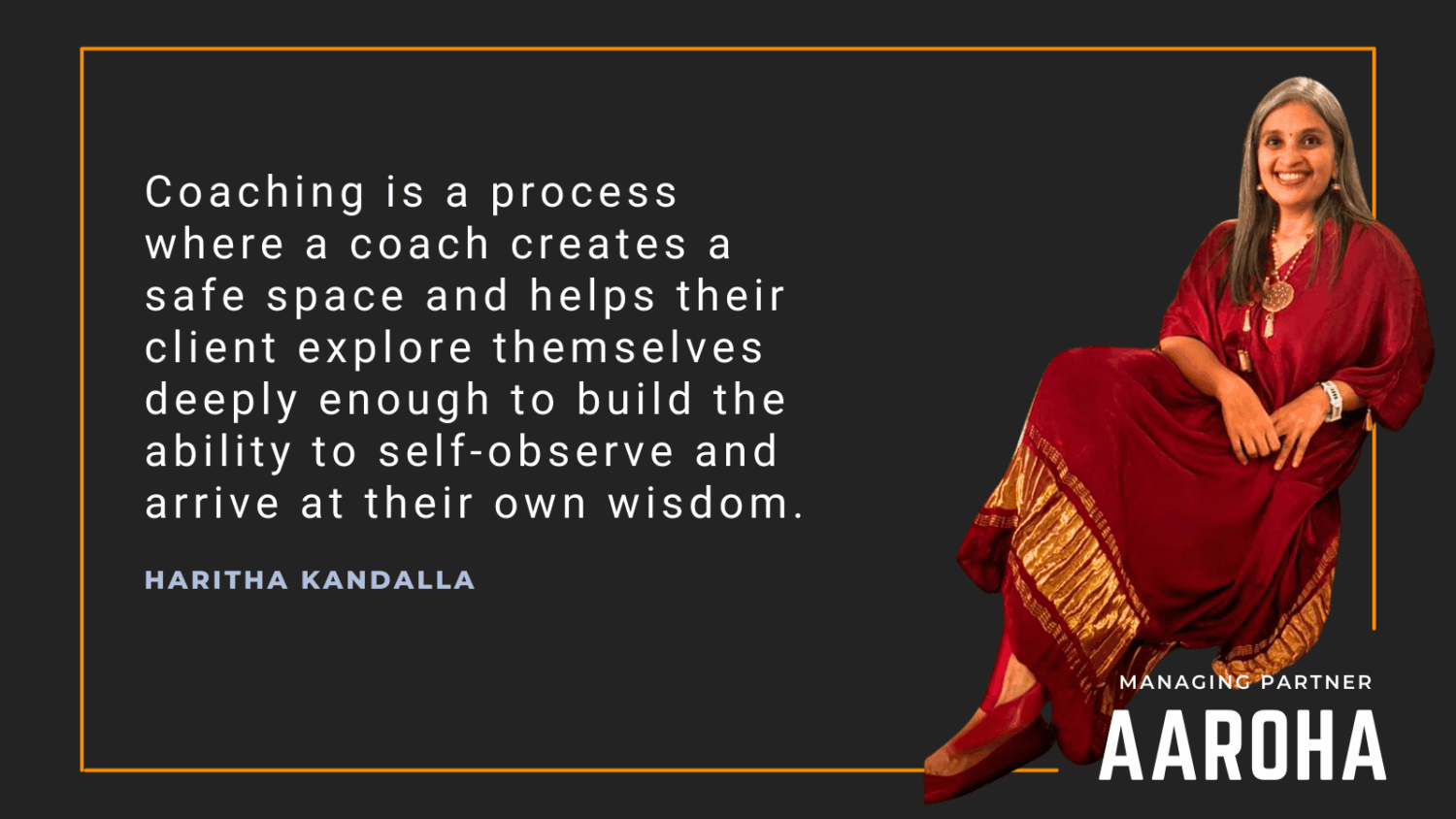
We sat down with Haritha, an ex-Microsoft with 2,000+ coaching hours across APAC, to explore what leadership coaching that creates real mindset shifts actually looks like.
This matters especially in Thailand, where the coaching industry is largely unregulated. Anyone can print “Coach” on a business card. So before you invest in coaching for yourself or your leaders, it’s worth understanding what real coaching is, what it isn’t, and what to look for.
Starting with bursting the most common misconception:
Coaching vs Mentoring
A mentor is your guide in a specific field. They’ve walked the path you want to walk. They share their expertise, advice, contacts, teaching, and war stories. Their value is in what they know.
A Coach’s expertise isn’t your industry or function. Their expertise is human beings.
So you won’t get answers. You’ll get questions that help you explore your inner world:
- Your mindset,
- Value system,
- Strongly-held beliefs,
- Deep-seated fears,
- Motivations…
“The Coach is there to help you find your own wisdom.”
Both are valuable.
But if you enter coaching expecting mentoring, you’ll miss the real transformation that happens when you stop looking outside for answers and start looking within.
The AARR Coaching Framework
Haritha shared the AARR framework, which is rooted in Indian philosophy’s concept of ‘witness consciousness‘ (Sakshibhav).
Here’s the core idea:
We all have the capacity to be both the experiencer (Drishya state) and the observer (Drik state) of a moment.
When you stay in the Drishya state, you’re too involved. Your emotions, thoughts, and reactions take over.
But when you move into the Drik state, you create distance. And that distance broadens your perspective.
What this looks like in leadership:
Imagine you’re leading a multinational team. During a global Zoom call, your team member from the Europe office openly questions your decision in front of senior stakeholders from headquarters.
As the experiencer, your mind floods:
- “Why are they undermining me?”
- “Do they not respect my authority?”
- “Everyone’s watching. I need to assert control.”
You react. Maybe you shut them down. Maybe you get defensive. Maybe you go silent and address it passive-aggressively later.
As the observer, you create space:
- “I’m feeling defensive right now. Why?”
- “What’s actually happening here? They asked a clarifying question.”
- “They’ve always delivered good work. This isn’t about undermining me.”
- “In their culture, challenging ideas openly is how they show engagement.”
From this space, you respond mindfully. “That’s a fair question. Let me explain my thinking…”
That’s witness consciousness in action.
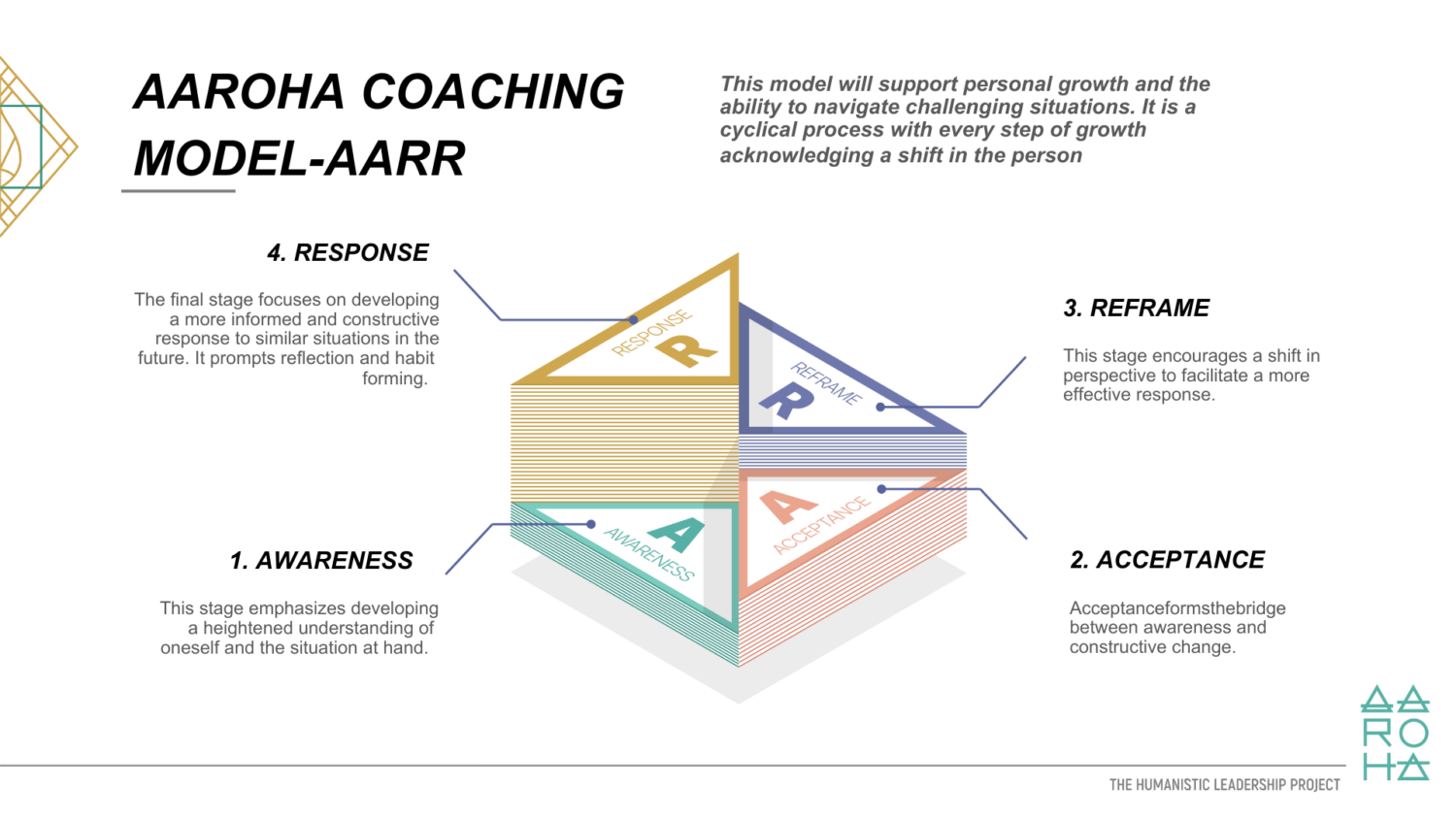
As Haritha says,
“moving from experiencer to observer is one of the most powerful leadership capabilities anyone can learn.”
We asked Haritha about the most common blind spot she sees among leaders. They don’t realise the impact they have on their teams.
They have good intentions, but those intentions don’t translate into impact because they’re stuck in the experiencer mode.
This framework gives leaders the meta-awareness to ask, “How am I showing up? What impact am I creating? Is this aligned with who I want to be?”
Common Leadership Coaching Mistakes
Mistake #1: Leaders refusing to shed their title
Some leaders treat coaching as a business meeting. They’re guarded. They stay in “leader mode.” And because they won’t shed the armour of their position, they can’t access the vulnerability needed for real growth.
You can’t explore yourself if you’re performing your title.
The coaching room is the one place where your title comes second. What matters is who you are underneath it.
This is harder than it sounds for senior leaders. The higher up you are, the more your identity and your role have merged. Separating “I am a Managing Director” from “I am a person who sometimes feels out of depth” takes deliberate practice. But that separation is exactly where growth lives.
Mistake #2: Leaders NOT willing to dive deep
Some leaders dip their toes in. They explore surface-level behaviours. “I need to communicate better. I need to delegate more.”
They’re not ready to dive deeper into their beliefs that’ve been running their decisions for decades.
Haritha is clear about this: “You can’t push someone to go deeper if they’re not ready.”
A skilled coach will mirror back what they’re hearing and ask, “Are you willing to explore this more deeply?” Ultimately, it’s the leader’s decision.
The deeper you’re willing to go, the more sustainable the change.
Mistake #3: HR using Coaching as performance management
An HR leader reached out: “We have a senior manager who’s underperforming. We’ve tried everything. Can you coach them? This is their last chance.”
When coaching becomes a veiled performance warning and when it’s forced, not chosen, the leader shows up defensive. They don’t trust the process. They perform rather than explore.
And if the coach is expected to report back to HR, confidentiality breaks down. Without a safe space, there’s no vulnerability. Without vulnerability, there’s no transformation.
If a leader genuinely wants one last chance and asks for coaching, it can work. But if HR is using it as a soft exit strategy, it won’t.
How to Make Leadership Coaching Work
What to expect as a Leader Coachee
-
The first conversation is a CHEMISTRY CHECK
Your first session isn’t coaching yet. It’s exploring how well you and the coach tango.
A skilled coach will listen to your story. Understand what brought you here. Clarify what coaching is (and isn’t).
You’re checking, “Do I feel safe with this person? Can I be honest here?”
If the chemistry isn’t there, find another coach. Trust matters more than credentials.
-
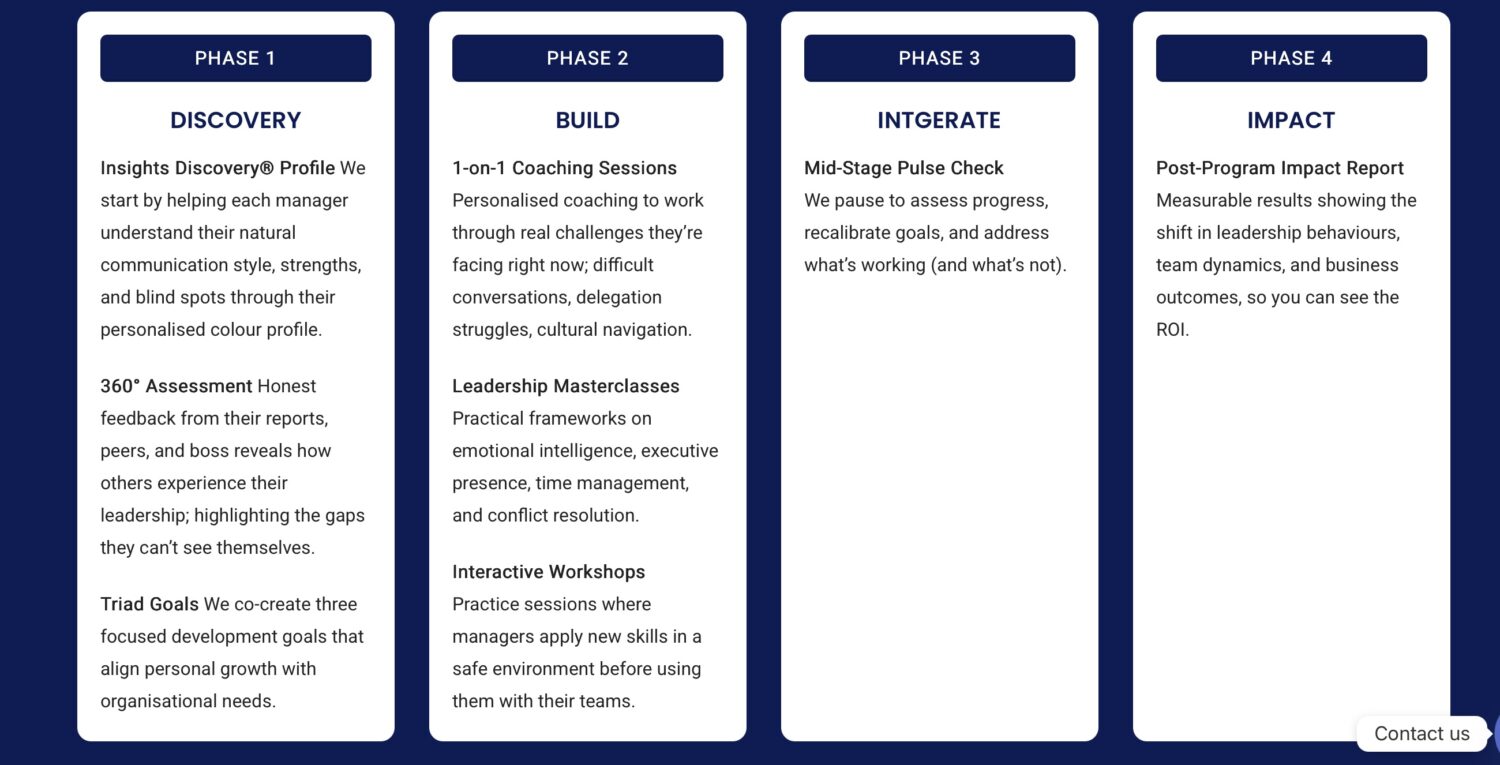
What a typical Coaching journey looks like
At Victus People, we run a structured 6-month leadership development program with a clear, measurable framework designed specifically for Thai leaders navigating multinational environments.
-
How to Make the Most of It
Come prepared. Before each session, reflect:
- What patterns did I notice this month?
- Where did I react instead of respond?
- What am I avoiding looking at?
Between sessions, practice the AARR framework. When you catch yourself in the experiencer state, pause. Create space. Respond from the observer position.
The more you bring to coaching, the more you’ll get from it.
How to Set Up for Success for HR and Business Leaders
For HR Managers and Business Leaders in Thailand, setting up a program requires a strategic approach to ensure a high Return on Investment (ROI).
-
Start with “Why”
Before bringing in coaching, get clear:
- What specific change do you need to see in your leaders?
- Where are they stuck?
- Is this a group challenge, an individual challenge, or both?
- Are the leaders ready for coaching? Do they want it?
-
(Always) Connect it to Business Outcomes
Don’t pitch coaching as “soft skills development.” Frame it as solving a business problem.
For example, people are leaving because they don’t trust their managers. Those are recruitment costs, lost knowledge, and team disruption.
OR, your leadership team can’t collaborate, so projects get delayed, and revenue targets slip. These aren’t HR problems. They’re business problems.
When you connect coaching to results, you get budget and buy-in.
-
Understand the Timeline
Coaching isn’t a quick fix. Coaching engagements typically range from 3 months (shortest) to 2 years (longest).
Why so long? Because real transformation (shifting mindset, not just behaviours) takes time.
Set realistic expectations with your leadership and your budget.
-
What Success looks like
You’ll know coaching is working when leaders develop meta-awareness (the ability to observe themselves in real time).
They start catching their patterns (“I’m getting defensive right now. Why?”) before others have to point them out. That self-observation becomes their internal coach.
Eventually, they coach themselves. That’s when you know the investment paid off.
When to Coach vs When to Hire a Coach
When Leader-as-Coach works well
This works when:
- The challenge is within their role and capability
- You’re focused on skill development or problem-solving
- The relationship has trust and psychological safety
- There’s no deep personal or behavioral pattern at play
Use the AARR framework. Ask powerful questions instead of giving answers. Create space for your team to arrive at their own solutions.
The key: You’re using coaching skills, not providing coaching as a professional service.
When to Bring in a Professional Coach
Some situations require an external perspective. Here’s when:
1. Deep Behavioural or Mindset Shifts
When a leader’s behaviour is impacting the business, but they can’t see it themselves, they need someone outside the system.
A professional coach can hold up the mirror without organisational politics getting in the way.
2. Senior Leadership Development
High-potential leaders or executives often can’t be vulnerable with anyone inside the organisation. They need a confidential space where their title doesn’t matter.
3. When Confidentiality Matters
If a leader needs to explore personal fears, limiting beliefs, or painful patterns, they won’t do that with their boss, their HR partner, or even a peer.
They need someone whose only job is to help them, not to report back, not to judge performance, just to create safety.
Final Thoughts
Professional coaching is expensive. It’s usually reserved for high-potential or senior leaders where the ROI justifies the investment.
But not everyone needs it.
Sometimes what a leader needs is self-awareness tools (like Insights Discovery® profiling).
Sometimes they need their manager to develop better coaching skills. Sometimes they need peer learning or group facilitation.
And if you’re not sure, get in touch. We’ll tell you honestly if coaching is the right intervention or not.
Haritha Kandalla and her team at Aaroha – The Humanistic Leadership Project are doing remarkable work blending psychological insights with Indian philosophy.
If you’re looking to support your Thai leaders navigating multinational environments, we run a 6-month program combining Insights Discovery® profiling, 360 Feedback, and 12 one-on-one coaching sessions. You get a mid-project pulse check and a post-project impact report with ROI.
FAQs
You can and should use coaching skills with your team (asking questions vs giving answers, creating space for them to think). This works well for performance conversations, skill development, and problem-solving.
Bring in an external coach when: The leader needs to explore deep personal patterns, can’t be vulnerable with anyone internal, or when their behaviour is impacting the business but they can’t see it themselves.
External coaches provide confidentiality and perspective that internal relationships can’t.
Chemistry matters more than credentials. The first conversation should feel safe. You’re checking: Can I be honest with this person? Do they create the space I need?
For organisations: Look for coaches who understand your cultural context. In Asian business environments, coaches need to navigate hierarchy, face-saving, and indirect communication styles.
Ask: Have they coached in multicultural settings? Do they understand the specific pressures Thai leaders face in multinational organisations?
Practical tip: Have your leader speak with 2-3 coaches before choosing. Trust your gut.
Individual coaching: Typically ranges from THB 6,500-20,000+ per session, depending on the coach’s experience and approach. Most engagements run 6-18 sessions (3-12 months).
ROI to measure: Reduced attrition (recruitment and onboarding costs saved), improved team performance (project delivery, collaboration), faster decision-making (less conflict, clearer communication), and leadership bench strength (promotion readiness).
Alternative: Group programmes combining profiling, coaching, and masterclasses offer better cost-per-leader for building awareness across multiple managers simultaneously.
Coaching works when:
- The leader chooses it voluntarily (not forced by HR)
- There’s genuine willingness to explore uncomfortable patterns
- Confidentiality is protected absolutely
- Clear goals are co-created between leader and coach
Coaching fails when:
- Used as veiled performance management
- Leader expects tips and answers instead of self-exploration
- The leader refuses to go deeper than surface behaviours
- It’s positioned as “fixing” someone rather than developing them
Early indicators (first month):
- Leader uses different language (“I noticed I…”vs “They made me…”
- Reports new insights about their own patterns
- Asks more questions, gives fewer immediate answers
Mid-term success (2-3 months):
- Team members report shifts in how the leader shows up
- Leader catches themselves reacting and course-corrects in real time
- Specific behavioural goals from 360° feedback show improvement
Long-term impact (6+ months):
- Leader demonstrates consistent self-observation (meta-awareness)
- Business metrics improve (team retention, collaboration, delivery)
- Leader coaches themselves through challenges without external support
The ultimate measure: When the leader no longer needs the coach because they’ve built the capacity to observe and adjust themselves.
Don’t use coaching when:
- The leader genuinely lacks technical skills or industry knowledge (they need training or mentoring)
- It’s being used to avoid difficult performance conversations (coaching isn’t performance management)
- The leader has no interest and is only showing up because HR required it
- The behaviour issue stems from burnout or mental health challenges (they may need therapy or medical support first)
- Team dynamics issues are systemic/structural, not leader-specific (you need organisational development, not individual coaching)
What to do instead: Sometimes leaders need Insights Discovery profiling to build awareness. Sometimes managers need coaching skills training. Sometimes teams need facilitated workshops. Match the intervention to the actual need.
