


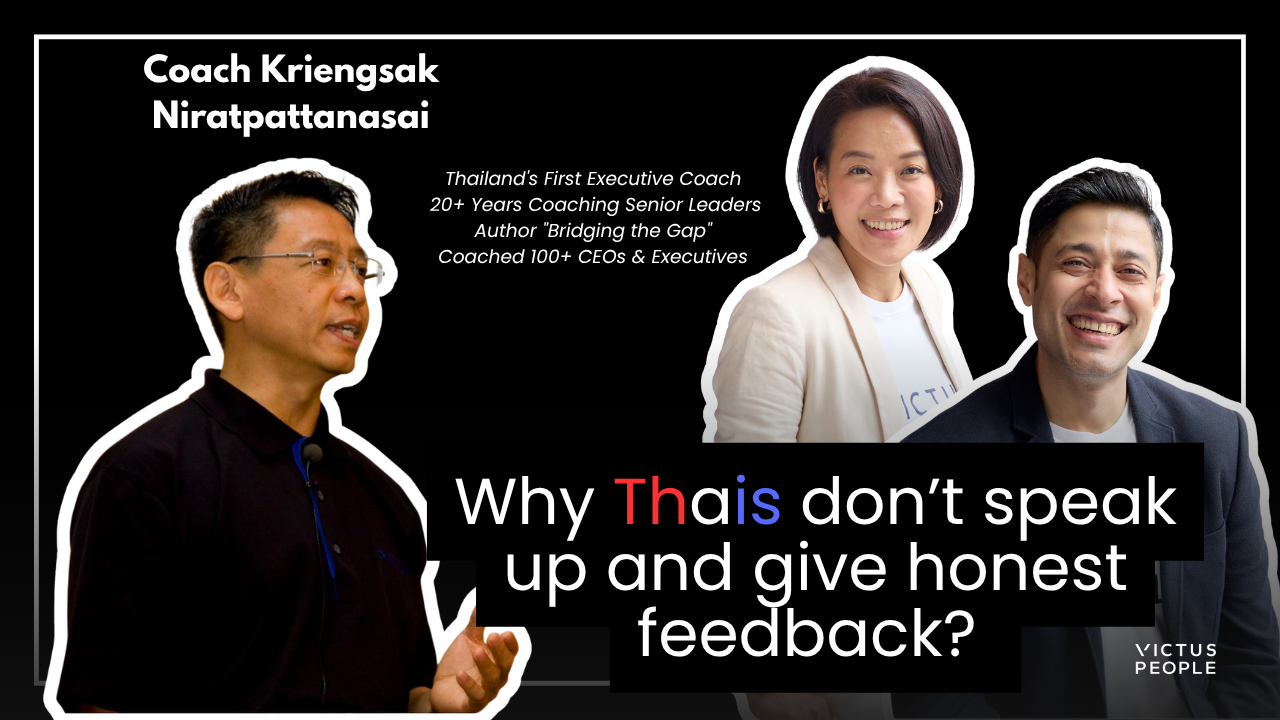
During lunch, we asked an expat leader, who has been here for more than 8 years leading a big Thai team (over 60 members),
“What do you think stops your team from sharing new ideas?”
He didn’t try to be polite nor did he blame the culture. What surprised us was how honestly he turned the lens on himself.
We spent 4 months conducting a cross-cultural leadership survey with more than 50 expat leaders to understand what frustrates them here, what they’ve tried and what actually works.
We compiled the full findings into a report. If you want the complete picture before diving in: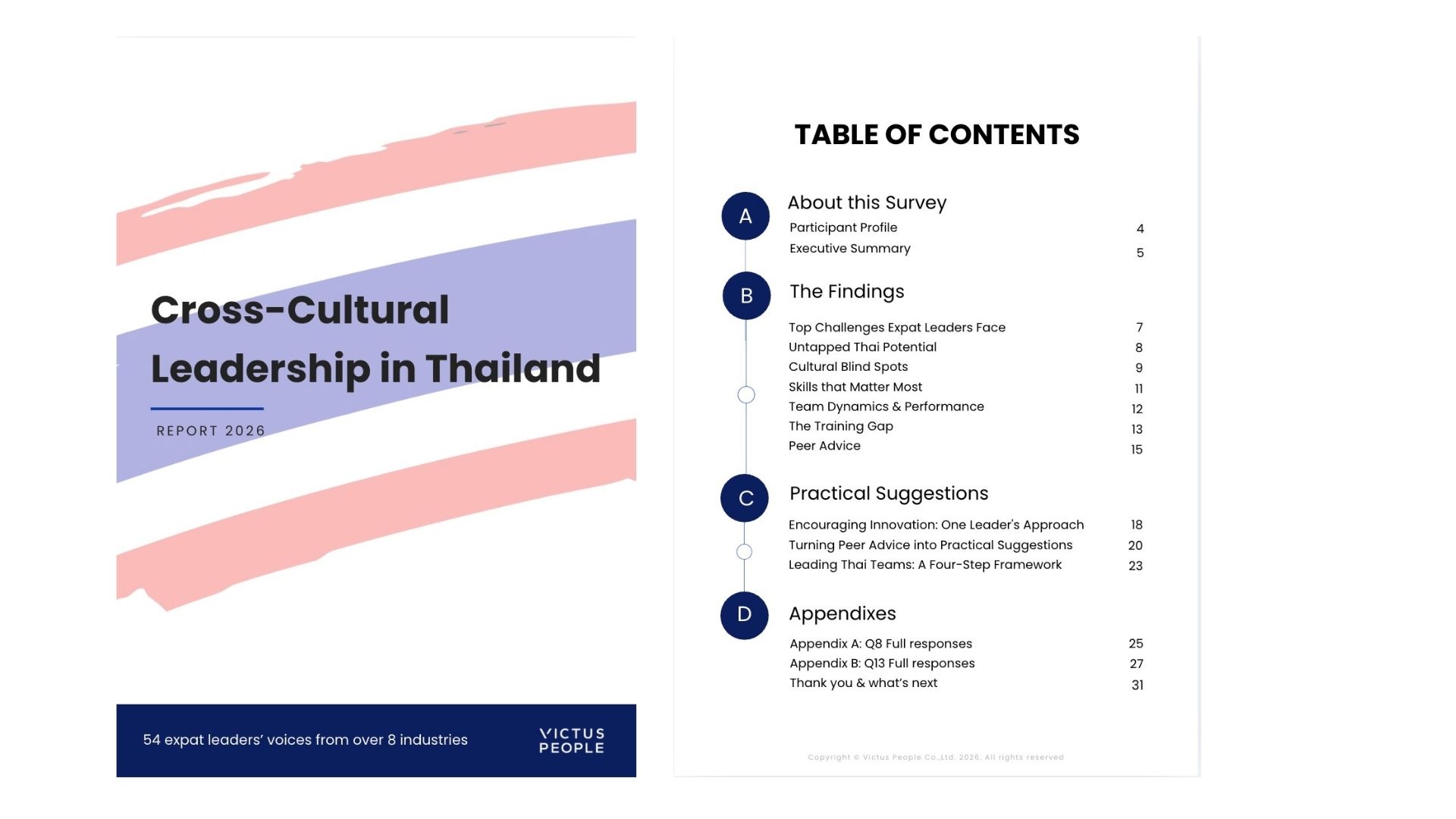
This newsletter is for expat leaders who have ever asked these questions:
- Why Thais don’t speak up in meetings and share “useful real-time” feedback?
- What motivates Thai professionals at work?, and
- How can an expat leader build trust with them?
Q1 – Why Thais don’t speak up in meetings and share “useful real-time” feedback?
Two reasons: either it isn’t safe yet or the risk of ‘losing face’ is too high.
Coach Kriengsak Niratpattanasai once was asked to speak with 4th year International Business Management students at a local university.
In his attempt to make the session interactive and engaging, he gave the students situations to discuss and share their ideas. To his surprise, the room had almost gone quiet. Even after a few minutes, there wasn’t much progress, so he decided to pause the session and have a genuine conversation with the students.
These are some of the student comments he received:
- “I’m afraid my answer in a group discussion will not be the ‘right’ one. I will ‘kai nah’ (‘lose face’)…”
- “I didn’t want to look stupid among my peers.”
- “I didn’t want to show off too much among my peers.”
The silence in your meetings isn’t apathy. It’s probably three very specific fears:
- of being wrong,
- of looking overconfident,
- of appearing incompetent in front of the group.
Most expat leaders read the silence wrong and that’s the real problem. Below is an approach that an Indian manager took to gain engagement and gain honest feedback from his Thai leadership team, who weren’t strong at English.
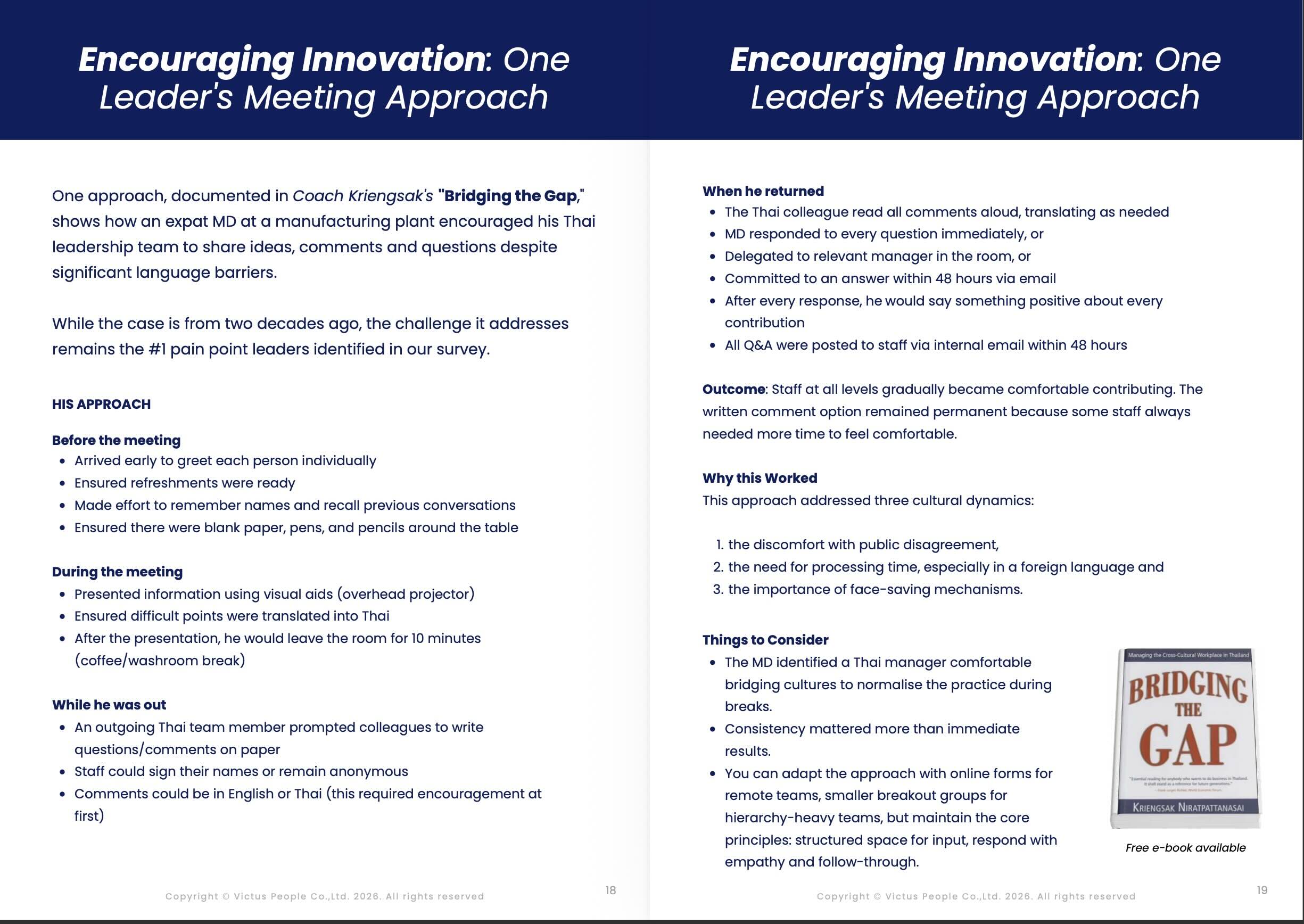
In a nutshell,
- Start by establishing a team norm where being wrong is genuinely acceptable
- Share your own mistakes openly and what you learnt from them.
- Acknowledge and support every comment, question or feedback you get
- And where possible, give people more than one way to participate; written, verbal, visual.
The goal is to make speaking up feel low-risk before you expect it to happen naturally.
Q2 – What motivates Thai professionals and why expat leaders often get it wrong?
There’s an old Thai saying, “ในน้ำมีปลา ในนามีข้าว”
“In the water there is fish, in the fields there is rice”
As a foreigner, you can quickly sense the relaxed way of life here. It’s one of the most attractive aspects of living in Thailand, and perhaps also one of the things that quietly frustrates expat leaders trying to understand what drives their teams.
The mistake we make is applying our own mental models designed back home to measure Thai ambitiousness. When a team member seems unbothered about promotion, it’s easy to read that as lack of drive. It usually isn’t.
In his early coaching sessions with senior Thai executives, Coach Kriengsak would ask directly about their ambitions, whether they had aspirations for the top. The response was almost always a version of the same thing:
“I don’t aim to be the CEO. I’m happy here. If the company sees potential in me, I’ll take the responsibility.”
Two things are happening here.
First, openly stating ambition risks being perceived as aggressive or threatening, neither of which sits comfortably within Thai workplace culture.
Second, Thais may reserve sharing their ambition because if they failed to achieve them, they will lose face.
It typically takes Coach Kriengsak several sessions before executives feel comfortable enough to talk about what they actually want.
What this means is, as an expat leader, if you want to understand the underlying motivations of your team members, invest time in building relationships. It’s a prerequisite.
Q3 – How to build trust with Thai teams?
Coach Kriengsak’s former American client, when he first came to Thailand, he started a ritual called ‘Coffee hours with the GM’.
Every Friday morning, he’d sit down with a small, informal group from across the business. No agenda. He would learn their nicknames, listen to their stories, share his and answer their questions.
Within 3 to 4 months, he had built relationships with over 100 staff members. Three years later, that country office was ranked among the most productive in the company globally.
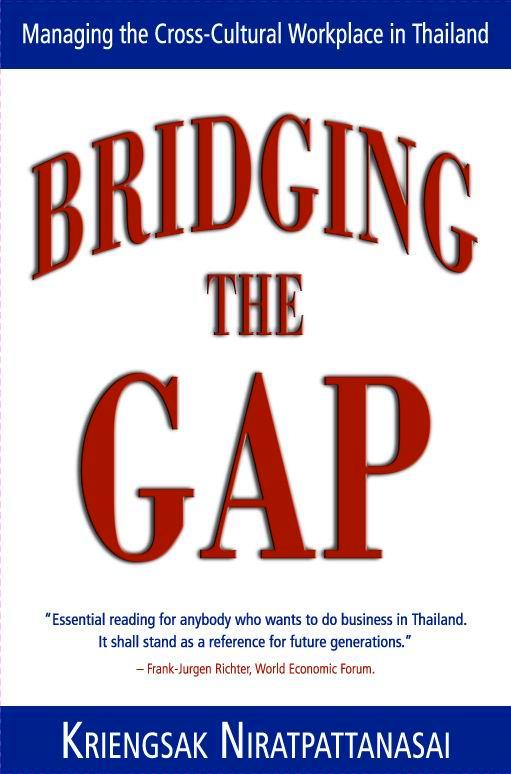
These skip-level meetings were so effective that Coach Kriengsak spoke about them with other Thai CEOs in his network. It soon became a tool for Bridging the Gap.
Thais trust leaders who,
-
Show Nam Jai: literally “water from the heart.” It means showing genuine care without expecting anything in return. Small gestures like remembering a personal detail, checking in without a work agenda, acknowledging someone’s effort quietly carry more weight. Thais notice when it’s real and when it’s performed.
-
Are Humble: hierarchy is deeply embedded in Thai workplaces, but it doesn’t mean Thais admire leaders who lean into their authority. The leaders who earn the most respect are often the ones who listen more than they speak, admit what they don’t know, and never make someone feel small in front of others.
-
Create a feeling of Pii-Nong: the older sibling, younger sibling dynamic. A trusted leader here is someone who looks out for you. Creating that feeling within a team builds a sense of belonging that no performance framework can replicate.
Remember that lunch we mentioned at the start. The expat leader responded his team’s hesitation to sharing new ideas came down to two things:
- The organisation’s culture
- His own willingness to accept and integrate into the Sabai Sabai way of life
What was interesting is that he’s deeply satisfied; professionally and personally. He wouldn’t mind achieving more, but the urgency just isn’t there anymore.
Academics might call that complex cultural integration. We’d just call it perspective. 😄
Listen to the full episode here
