



In our ‘Building High Performing Teams‘ program, leaders consistently ask us four questions:
-
What is a high-performing team?
-
What leadership qualities build high-performing teams?
-
How do we measure if our team is high-performing?
-
How can we improve our team’s effectiveness?
What’s interesting is that most leaders think building high-performing teams is about hiring A players, setting ambitious targets, providing clear direction and voilá. Unfortunately, research findings don’t agree.
In fact, you can have a room full of brilliant people and still end up with a dysfunctional team. Imagine coaching a team of 11 Cristiano Ronaldos. Everyone wants the ball. No one wants to defend. Teamwork becomes a battle of egos.
So what separates a collection of talented individuals from an actually high-performing team?
Last week, we explored this question with Zozo Abraham, a trusted learning consultant and facilitator with deep learning and development expertise and over 36 years of corporate experience, working across continents and across every team configuration imaginable; intact, distributed, hybrid, multinational, you name it.
What exactly is a high-performing team?
When we asked Zozo, she kept it refreshingly simple:
“Teams where results, performance, and relationships matter equally.”
And what does that actually look like in practice?
After studying organisational teams for over two decades, Vanessa Druskat and her team of researchers found that “members in high-performing groups could articulate one another’s likes, dislikes, concerns, motivations, biases and peeves” In other words, they knew each other as people, not just roles.
In such teams, decisions are made faster, information flows effortlessly and valuable products get launched sooner and cheaper. Here, the best ideas constantly compete with each other to rise on top. Patrick Lencioni would call this ‘healthy conflict for higher productivity’.
When you get all three right, results, performance, and relationships, here’s what you see:
-
Team members share ideas, concerns, and mistakes without fear.
-
Roles, expectations, and priorities are clear, and followed.
-
Information flows freely, and conversations stay constructive.
-
Members follow through, deliver reliably, and support one another when challenges arise.
-
Interactions are positive, and the team adapts, learns, and moves forward together.

What leadership qualities build a high-performing team?
The kind of leader who makes you better even after you leave.
To this day, Zozo calls him ‘her manager’; the leader from her banking days.
Long before words like ‘psychological safety’, ‘flexible working hours’ or ‘empowerment leadership’ were part of corporate buzzwords, he was practicing it.
3 Characteristics of his Leadership
- Created an environment where members felt comfortable to be themselves
- Supported team members when they needed it most (Zozo had flexible working hours back then)
- Fostered growth mindset even if it meant losing talent
His leadership philosophy, captures the essence beautifully:
Become so skilled that you won’t need me at all.
Most leaders say they want to develop their people. Few are actually willing to make themselves unnecessary. That willingness to prioritise someone’s growth over your own convenience is what separates managers from leaders who build high-performing teams.
How to Measure High-Performing Team Effectiveness?
You could wait for quarterly results, engagement surveys, or performance reviews. Or you could use Zozo’s quick ‘temperature gauge’ of your teams:
- Observe how your team members react when you invite them for a conversation. Are they looking forward to it or dreading it? Are they telling you what they really want to say, or what you want to hear?
- Pay attention to what they’re NOT saying (the gaps, the hesitations, the careful word choices). This is especially critical if you’re leading a Thai or Asian team, where hierarchy and harmony are often valued over uncomfortable truths or ‘honest’ feedback.
A successful CEO of a global organisation understood that strong leadership starts with listening. By creating space for every voice on her leadership team, she developed a deeper insight into the challenges, opportunities, and realities facing the business.
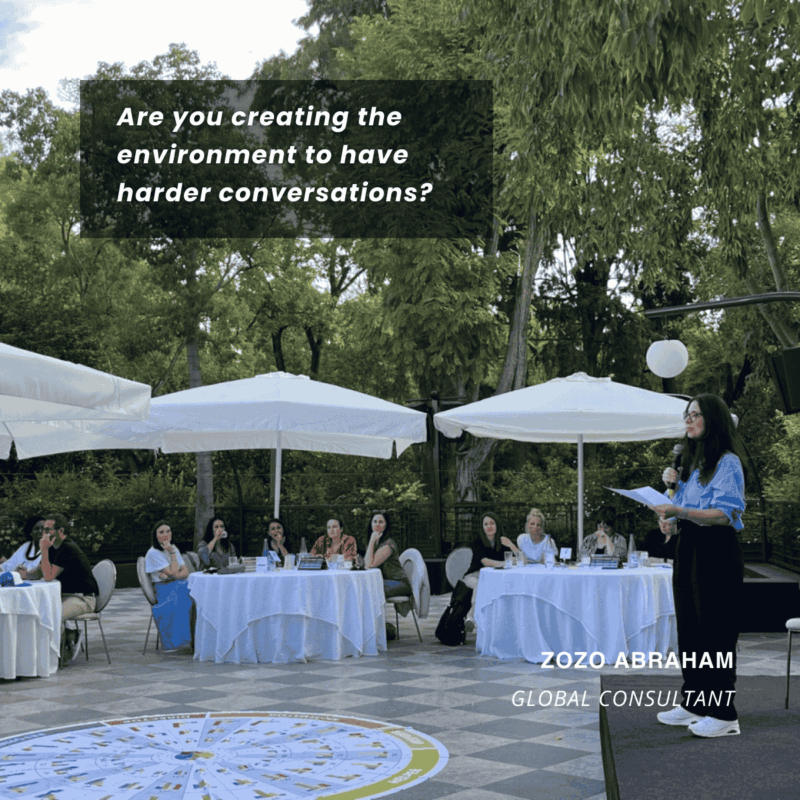
Here is a phrase every leader should add to their repertoire:
“You know what. … This is what I’m noticing. I might be wrong, but I’d love to hear your thoughts.”
And then stay quiet, even if the silence feels long and uncomfortable.
This simple phrase does three things:
- Acknowledges you might not have the full picture
- Invites honest input without pressure
- Creates space for people to think and respond authentically
Want a more structured approach?
Our ‘Team Performance Assessment‘ survey gives you objective data on where your team is succeeding and where there’s opportunity to improve. The tool measures critical performance factors across 32 validated attributes, organised into four complementary team effectiveness pillars.
Managing Toxic Behavior in High-Performing Teams
When you notice behaviour that’s unacceptable, your first instinct might be to confront it head-on. Zozo offers a different approach.
Before you act, investigate.
Leaders need to understand what’s really going on with this team member without jumping to conclusions. The question isn’t just “What are they doing?” but “Why are they doing it?“
Zozo shared a situation where one team member’s behaviour had become increasingly ‘unacceptable’ and had to be brought to the leader’s awareness.
The leader, after a one-on-one conversation, discovered that things had been piling up for months for this individual. It had all accumulated until the team member reached a breaking point. They were reacting.

Zozo’s framework for addressing difficult behaviour:
1. Discover their ‘why’ What’s driving this behaviour? Is it personal stress, workplace frustration, feeling undervalued, team dynamics they can’t navigate? You can’t address the behaviour without understanding the root cause.
2. Assess if you can support their ‘why’ Can you challenge them constructively? Consult with them on solutions? Support them through the difficulty? Guide them back to productive behaviour?
If the answer is yes, create a plan together.
3. Protect the team If this individual is consuming all your energy, time, and resources while their behaviour continues to impact everyone else, you’re not being fair to the rest of the team.
As a leader, your role is to protect every team member.
4. Have the difficult conversation Consider who needs to be involved in the conversation. Remain respectful and clear:
“We want to be open about what we’re noticing and how it’s affecting the team. There are some clear expectations around what needs to shift, and we want to understand how you see it too. Our intention is to support you, and we’re willing to work with you on this matter.”
From there, give space for reflection and choice.
Sometimes, looking after the psychological safety and effectiveness of the wider team means making difficult decisions – and that’s never easy.
Building high-performing teams isn’t about bringing together star performers and hoping they will magically work well together.
It’s about intentionally creating the conditions where psychological safety, trust, and accountability can thrive.
The leaders who succeed at this:
- Listen more than they speak, especially for what’s NOT being said
- Address difficult behaviour directly by discovering the ‘why’ before they judge
- Protect the team’s psychological safety above all else
- Understand that if people don’t feel valued, heard and understood, metrics won’t matter.
In Asian workplace cultures, where hierarchy runs deep and harmony often overrides honesty, this work is even more critical.
You team has the potential but,
Are you creating the environment where that potential can actually show up?
If you’re not sure, our Team Performance Assessment can show you where to start.
Reference
Druskat, V. U. (2025). The Emotionally Intelligent Team: Building Collaborative Groups that Outperform the Rest (p. 42). Harvard Business Review Press.
FAQs
Building psychological safety and trust typically takes 3-6 months with consistent effort. You’ll see early improvements (more open communication, fewer conflicts) within 4-6 weeks if leaders actively model vulnerability and address difficult behaviors promptly.
Start by acknowledging the cultural context directly. Use phrases like “I might be wrong, but I’d love to hear your thoughts” to give permission for honest input without forcing Western-style directness.
Create structured opportunities for input (written feedback, small group discussions) rather than expecting public disagreement.
Pay close attention to what’s NOT being said (gaps, hesitations, careful word choices).
Model vulnerability yourself by admitting mistakes and showing that speaking up has no negative consequences.
Start with listening, not fixing. Use the phrase: “This is what I’m noticing. I might be wrong, but I’d love to hear your thoughts.” Then stay quiet, even through uncomfortable silence.
Before addressing performance issues, understand what team members experience: Do they feel safe? Do they know what’s expected? Do they trust each other?
Use our Team Performance Assessment to get objective data across 32 validated attributes. Address psychological safety first.
Use Zozo’s framework: Discover their ‘why’ first. Have a private conversation to understand what’s driving the behavior (personal stress, workplace frustration, feeling undervalued)?
If you can support their ‘why’ through coaching, resources, or adjustments, create a plan together. If their behavior continues consuming your energy while impacting the entire team despite support, you have a protection issue.
The question isn’t “Are they struggling?“—it’s “Can we address the root cause while protecting the team’s psychological safety?”
