


When departments work in silos, everyone loses; especially, your clients. They get mixed messages, experience delays, and feel the dysfunction you’re trying to hide. This internal chaos bleeds into client interactions, eventually damaging trust and revenue.
You can achieve cross-functional team alignment with these three core practices:
- Timeline Activity for building trust,
- Daily Huddles for tactical alignment, and
- Quarterly Themes for strategic focus.
Implementation typically shows results within 2-3 weeks.
Signs Your Teams Lacks Internal Alignment
- Departments operate in silos and rarely align on client strategy
- Clients receive inconsistent answers depending on who they contact
- Teams avoid difficult conversations until they escalate into crises
- No common goal. There’s no One Critical Number everyone is chasing together
This is how it looks like in real teams.
Case Study 1: When Sales and Product Don’t Talk
The product team complains that sales overpromises to clients, has weak product knowledge, and doesn’t consult before committing to deliverables.
Meanwhile, the sales team believes customer support lacks initiative, responds slowly, and is disconnected from market realities.
Case Study 2: Leadership Misalignment
A senior leadership team struggles with low psychological safety and accountability. Two leaders hold back during meetings. One has raised concerns about unfair KPI distribution.
Everyone is busy meeting their individual targets and managing their own teams back home. The misalignment remains unaddressed, simmering beneath the surface.
Moral of the story: When internal stakeholders aren’t aligned, your clients feel it too in delayed responses, conflicting information, broken promises…
Below are three best practices we suggest our clients to align cross-functional teams and create a unified “One Team, One Voice” culture.
The practices outlined in this post are inspired by Verne Harnish and his team’s Scaling Up: How a Few Companies Make It…and Why the Rest Don’t.
We’ve adapted them specifically for cross-functional team alignment in Thai and multinational contexts.
—————————————–—————————————–—————————————–
3 Best Practices to Align Cross-Functional Teams Strategically.
Practice #1: The Timeline Activity – Building Trust Through Origin Stories
The Problem: Teams that don’t know each other’s backgrounds struggle to build trust. Without trust, alignment is impossible.
The Solution: Before jumping into strategy sessions or goal-setting, help team members understand who they’re working with NOT just what they do.
We’ve used this tool with senior leadership teams, function heads, and frontline staff across organisations. Every time, the outcome is similar:
people feel more connected, understood, and valued.
Pat Lencioni’s team uses a variation of this exercise with leadership teams to deepen relationships among members.
The core idea is simple yet powerful. Ask members to reflect on and share their origin stories.
How Timeline Activity works
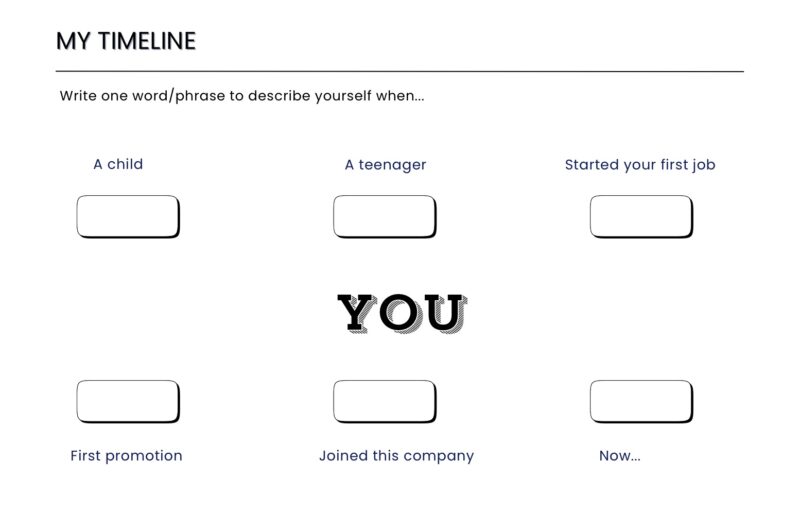
Step 1: Members individually complete the handout by writing a word or phrase to describe important phases of their lives
Step 2: Each person creates a cohesive story connecting those phases to who they are today professionally and personally.
Step 3: Members share their origin stories with the team. Ensure everyone gets to hear each other’s narratives.
Step 4: After sharing, team members reflect on the experience and share one new thing they learned about their peers.
Pro tip: Make it more engaging by using A4 sheets, coloured markers, images, or even digital whiteboards for remote teams.
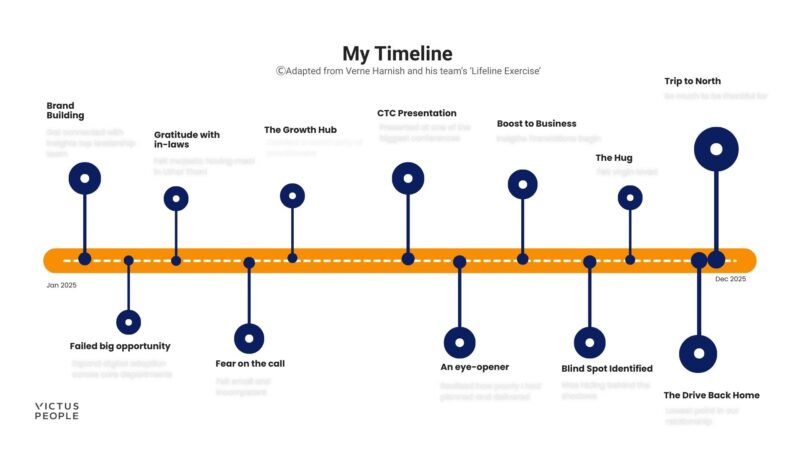
Real Impact: A Manager’s Vulnerable Moment
During one of our “One Team, One Voice“ workshops, a team discovered that their manager had declined a promotion when it was first offered. Not because they didn’t want it, but because they feared they wouldn’t meet the team’s expectations.
That simple gesture of vulnerability changed the entire room’s dynamics. Psychological safety shot up immediately. People felt more connected and comfortable opening up space for the difficult conversations we needed to tackle later in the workshop.
Why it works: When people understand the experiences that shaped their colleagues, empathy increases and psychological safety deepens. This creates the foundation for honest conversations about alignment challenges.
—————————————–—————————————–—————————————–
Practice #2: Daily Huddles – Create Shared Reality in 15 Minutes
The Problem: Teams often struggle with day-to-day alignment. Information gets trapped in silos, priorities misalign, and small issues snowball into crises.
The Solution: Implement a structured 15-minute communication rhythm that creates shared reality across your entire organisation.
Daily huddle is one of the easiest ways to bring clarity and ensure information flows quickly and accurately. But there’s a challenge.
Most teams resist daily meetings because they’ve experienced too many dreadfully long, boring, irrelevant meetings dominated by a few voices.
The problem isn’t daily meetings, it’s the way they’re run.
How the World’s Best Do It: The Ritz-Carlton Example
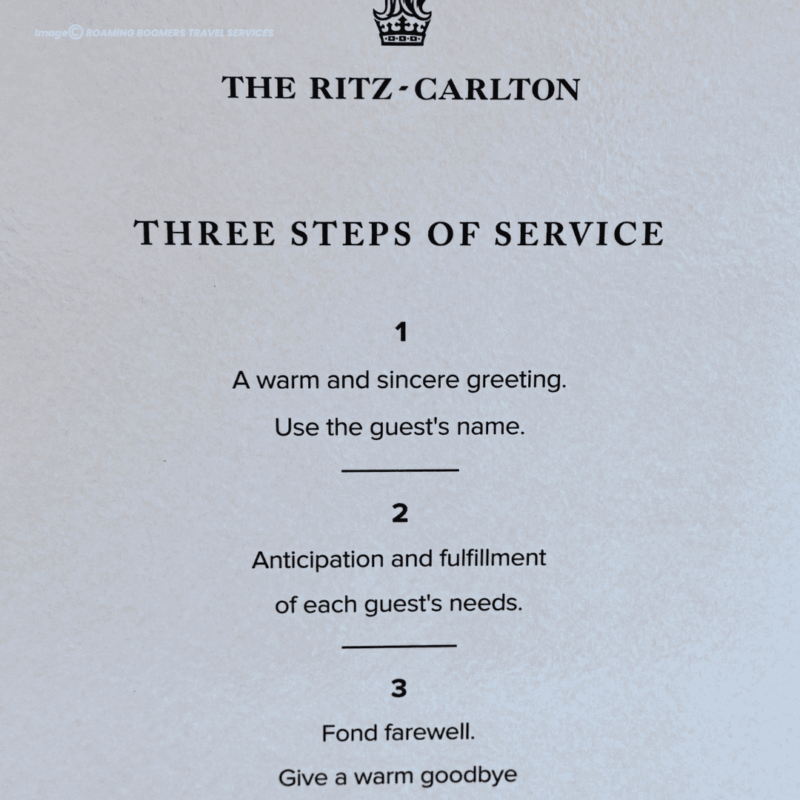
Ritz-Carlton conducts a Daily Line Up with about 80 people at its headquarters in just 10 minutes, sharing updates from Houston to Hanoi. Every single member of their 40,000-person staff participates in a Daily Line Up somewhere in the world, every day.
The result: Strong alignment, rapid information flow, and a culture where everyone knows what matters today.
You can achieve the same results with this framework:
The daily huddle FRAMEWORK
Duration: Not longer than 15 minutes
Purpose: To provide updates and identify (not solve) any tactical issues
Agenda: Same everyday. Answer three questions.
The Three Daily Huddle Questions
Every team member gets 1 minute to answer:
1. What are your top priorities today? (max 3)
Why this matters: Creates transparency and prevents duplicate efforts
2. How are the daily metrics? (verbalise the numbers)
Why this matters: Verbalising metrics makes them come alive and drives accountability
3. Where are you stuck? (obstacles hindering your performance today)
Why this matters: Surfaces critical issues and trends before they become crises
Note: For large teams, department or project heads can answer these questions on behalf of their groups.
Daily Huddle Best Practices
Timing Tactics:
- Start at odd times (8:08, 9:11, 9:36). People are more likely to be on time
- Always start on time, even if people are late (no exceptions)
- Use a countdown timer to maintain discipline
Energy & Engagement:
- Have everyone stand to keep momentum and energy high
- Let someone highly organised and structured facilitate (doesn’t need to be an ELT member)
Focus Rules:
- Avoid problem-solving during the huddle. If an issue requires discussion, take it offline with the relevant team members
- Updates must be specific and about key activities, not routine calendar events
What Makes a Good Update? (Example)
Bad Update: “I have a meeting this afternoon with a potential client.”
Good Update: “I have a sales pitch at 12pm with Koun Simona, COO of Token Electronics, at her office to discuss pricing and our experience working with EMS organisations.”
When you share a specific update, others can mentally run through:
- “This meeting is with the COO. High stakes.”
- “I have a connection at Token Electronics. Maybe that can help?”
- “Clients are worried about pricing?” 🤔
- “12pm is lunch time. Is that the best time for a sales pitch?”
- “I know the Plant Manager of an EMS company. Should we speak to her?”
The Compound Effect of Daily Huddles
A well-run daily huddle opens up space and time for more productive weekly and monthly meetings because your leadership team now has a stronger grip on trends and critical issues before they escalate.
Key metrics to track:
- Time saved in longer meetings (typically 2-3 hours per week)
- Issues caught early (before becoming crises)
- Cross-functional collaboration moments (connections made during huddles)
—————————————–—————————————–—————————————–
Practice #3: Quarterly Themes – Rally Your Team Around One Critical Number
The Problem: Daily huddles keep teams aligned tactically, but without a shared strategic goal, people still work in different directions.
The Solution: Quarterly Themes is a proven method from the Rockefeller Habits framework that rallies your entire organisation around achieving ONE common goal.
How The City Bin Co. Grew Their Business with Quarterly Themes
When Ireland’s economy tumbled due to global economic crisis, The City Bin Co. adopted the popular Rockefeller Habit of ‘Quarterly Themes’ to get themselves out of their complacency.
The idea was to rally everyone around achieving ONE common goal.
They picked One Critical Number that was the most important thing for the business in the next 90 days and created a fun theme out of it.
Then, they made it impossible to ignore:
- A Champion presented the number to everyone
- Posters and memes went up everywhere
- Weekly progress checks kept momentum alive
- Rewards were clear and tiered

Example:
Quarterly theme: “Saving Mrs. Ryan” (inspired by Saving Private Ryan)
The story: Save customers from outdated competitor services
One Critical Number: 10,000 new customers
The Rewards:
- 6,000 customers = Company party in the parking lot
- 10,000 customers = Beach trip for everyone
- 12,000 customers = Special bonuses
The Result: Suddenly, everyone knew exactly how their daily work connected to something bigger. The receptionist answering phones, the driver collecting bins, the accountant processing invoices, they all understood their role in hitting 10,000.
Why it worked: The theme created emotional connection (saving Mrs. Ryan), the number created clarity (10,000), and the rewards created motivation (beach trip).
How to Implement Quarterly Themes in Your Organisation
Step 1: Identify Your One Critical Number
The leadership team and function heads come together to answer: What’s the most important thing happening in our business in the next 90 days that we need everyone aligned on?
This could be:
- Number of new clients
- Amount of cost savings
- Customer satisfaction score
- Removing a critical bottleneck
- Market awareness metrics
- Contract renewals
Step 2: Create a Memorable Theme
Nominate a “champion” (someone energetic and engaging) to present the One Critical Number to the entire staff. Frame it in a fun, light-hearted theme that tells a story people can remember.
Step 3: Make the Goal Multi-Tiered
Create three achievement levels with escalating rewards. This keeps teams motivated even if they don’t hit the stretch goal.
Step 4: Track Progress Weekly
Don’t wait until the end of the quarter. Share progress updates in your weekly meetings to maintain momentum.
Step 5: Learn and Adapt
If you don’t reach any of the tiers:
- Carry it forward into the next quarter if you see positive momentum
- Move on to another Critical Number that better aligns with current market trends
- Analyse the bottleneck. Identify why you couldn’t reach the goal and make that bottleneck your next quarter’s theme
Another Powerful Example of a Quarterly Theme
Theme: “180 to One“
- Goal: Build empathy, strengthen departmental cohesion, and increase customer service quality
- Strategy: Each of 60 employees spent 1 day per month (60 × 3 = 180 days) observing and working with staff from another department
- Visual: Vegas horse race betting ticket marked “180 To One”
- Result: Gene Browne, CEO of The City Bin Co., said:
“We’ve seen a big change in our culture. ….If you ask people what The City Bin Co. is about, they will say ‘customer service.'”
Critical Success Factors (What NOT to Do)
1. Protect Salaries
People’s base salaries should never be adversely impacted by quarterly theme failure. Rewards are bonuses, not salary protection.
2. Align with Reality
Your Critical Number must align with current market trends and reflect organisational realities.
3. Create a Strategic Plan
A fun theme isn’t enough. You need a strategic plan everyone can see and execute against. That’s where the One Page Strategic Plan comes in.
Look out for our next post on how to align the entire organisation with a one-page strategic plan.
—————————————–—————————————–—————————————–
How to Align Cross-Functional Teams: Summary
Cross-functional team alignment requires addressing both trust and systems. These Rockefeller Habits from Verne Harnish’s Scaling Up practices work because they address both the human side (trust, psychological safety) and the systems side (clear goals, accountability) of team performance.
- Timeline Activity builds trust and psychological safety by sharing origin stories
- Daily Huddles create shared reality in 15 minutes daily
- Quarterly Themes rally everyone around One Critical Number for strategic focus
These strategies work for multinational teams, remote teams, and organizations struggling with departmental silos.
FAQs
Cross-functional team alignment means different departments (sales, product, customer service, operations) work toward shared goals with consistent communication, unified priorities, and mutual accountability. Instead of each team optimizing for their own metrics, aligned teams coordinate their efforts so clients experience “One Team, One Voice” regardless of who they interact with.
Silos form when:
- Different incentives: Misaligned KPIs create competing priorities. Sales is rewarded for revenue, product for innovation, support for response time.
- Poor information flow: No structured communication rhythm means critical updates stay trapped in departments
- Lack of trust: Teams that don’t understand each other’s constraints default to blame instead of collaboration
- Unclear common goals: Without a shared “North Star,” every department optimises locally instead of globally
Two primary reasons:
- The human factor: Low psychological safety prevents honest conversations about conflicts, misaligned priorities, or performance issues.
- The systems factor: No structured mechanisms for daily coordination, progress tracking, or strategic focus.
Most organisations focus only on strategy or only on culture. Sustainable alignment requires both.
If trust is low, start with the Timeline Activity. If communication is chaotic, implement Daily Huddles first. If priorities are scattered, launch a Quarterly Theme. Most teams benefit from:
Timeline Activity (Week 1) → Daily Huddles (Week 2) → Quarterly Theme (Month 2)
You’ll see tactical improvements (better information flow, fewer surprises) within 2-3 weeks of starting daily huddles. Deeper strategic alignment typically emerges after 2-3 quarters of consistent practice.
Yes. Daily huddles work perfectly on Zoom, Timeline Activities can use digital whiteboards, and Quarterly Themes just need more visual reinforcement through digital channels. The principles stay the same, only the delivery changes.
Start with what you control. Implement daily huddles with your team, run a Timeline Activity in your next meeting, create a department-level plan. Document results, then present them to leadership.
Daily Huddles: 15 minutes daily. Timeline Activity: 2-3 hours (one-time). Quarterly Themes: 4-6 hours per quarter. Most teams save weekly hours in coordination meetings and significantly improve their crisis management time.
